
 Richard Lawton
Search engine optimisation (SEO) is a critical marketing channel for businesses that need an ongoing source of organic visibility and traffic to help reduce their dependence on PPC Paid Media. However, even well-established companies can fall victim to SEO blunders and ill advised attempts at short term SEO gains that cause real damage to businesses.
From plummeting search rankings to significant financial losses, the repercussions of poor SEO choices can be devastating to your revenues. It’s crucial to learn from the mistakes of others. SEO disasters often stem from outdated practices, lack of knowledge, or attempts to game the system.
Explore some of the most epic public SEO fails in recent history (that we know about). By examining these cautionary tales, beyond a little schadenfreude, we aim to highlight the importance of effective SEO strategies and the risks associated with neglecting SEO best practices to ensure your business doesn’t appear on a list like this.
Terrible Technical SEO
Careful attention to technical SEO is absolutely crucial when a website undergoes structural change such as a website redesign or moving to a new domain. An SEO and User Experience (UX) research led site information architecture and URL redirects are an essential element, ensuring seamless navigation for both users and search engines when URLs are altered.
Without proper redirects put in place, the link equity and SEO authority painstakingly built over time can dissipate, leading to broken links for users (poor user experience) and a decline in search rankings / organic visibility. Clear guidance for search engines ensures the continuity of content relevance and accessibility for both search engines and users.

Equally important is the precise configuration of your Robots.txt file. This file acts as a gatekeeper, instructing search engines on which pages to crawl and index. It helps to manage which pages of your site are eligible to be found in Search.
An improperly configured Robots.txt file might accidentally block search engines from accessing critical pages, resulting in a stark drop in organic search visibility. Ensuring your Robots.txt directives are correctly set up to allow essential page access for web crawlers is vital.
Real-World Case: Ryanair in 2014 & 2020
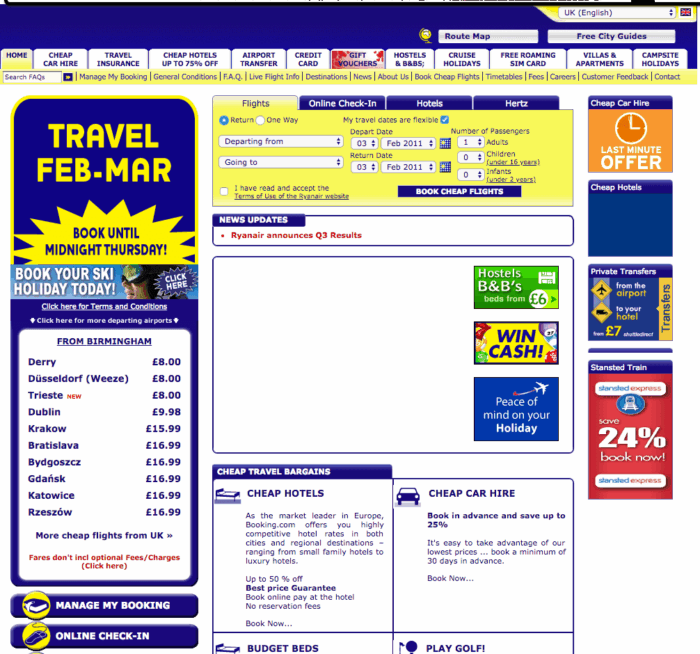
When Ryanair overhauled its website in 2014, the aim was to improve user experience by eliminating excessive upsell prompts and reducing cognitive overload for users as clearly was the case below. However, their technical SEO management of the move led to SEO disaster.
The new website introduced a completely new URL structure, but they failed to implement proper 301 redirects from the old URLs. Because of these broken links and missing redirects, the previous SEO value and authority tied to old URLs didn’t transfer to the new structure, creating gaps in search engine rankings.
As a result, many pages went “dead,” returning 404 errors and causing search engines to drop those URLs from their indexes. Ryanair’s rankings for key terms, including potentially important “head” terms, dropped significantly. Some even disappeared from the top 100 results for search queries like “flights to France”.
Again, more recently in May 2020, the Ryanair website briefly became non indexable by search engines due to a change in their robots.txt file. The file contained a directive that disallowed all search engine crawlers from accessing the site, effectively making it invisible to search engines, which severely impacted traffic and revenue.
When your robots.txt blocks search engines or LLMs like ChatGPT etc, you’re effectively shutting the door on organic traffic, this can lead to massive visibility loss, fewer bookings, and a direct hit to revenue. Though the exact figures weren’t made public, this kind of core SEO mistake can cripple traffic flow overnight.
These two major SEO fails by Ryanair highlight the critical need for diligent technical SEO practices to ensure continuity and preserve online visibility during major structural changes.
Perilous Paid Links
Acquiring links to your site from trustworthy sources which are relevant to your industry is an essential part of any good SEO strategy, normally achieved with an excellent and timely content strategy that people will want to link to and a healthy does of Digital PR.
However, purchasing links to your site from other websites goes against Google’s Spam Policies if not clearly marked as ‘Sponsored’ links. Google’s algorithms are adept at identifying and penalising manipulative tactics like this, they don’t always catch them quickly but when they do, the consequences can be severe, including a marked decline in search visibility and potential removal from search results entirely, impacting both organic traffic and revenue.
Links acquired through payment often lack quality and relevance, undermining the credibility of the site they link to. You often see these offers for this type of link building arriving unsolicited in your email. When search engines detect these low quality links, they can view the site with suspicion, affecting its trustworthiness and standing. Also, users may view the brand negatively, perceiving it as engaging in dishonest practices.
Building genuine, high-quality backlinks through ethical strategies such as content marketing and relationship building is essential for sustaining a positive online reputation.

Real-World Case: Overstock.com
In 2011, overstock.com faced SEO penalties for a link-building strategy that went against Google’s guidelines. The company offered discounts to students and faculty in exchange for backlinks from educational institutions. These links were embedded with specific anchor text, perceived as a manipulative tactic by Google.
Their approach resulted in a manual action from a human reviewer (yes they exist) at Google that severely impacted search visibility and traffic. The case highlights the importance of adhering to ethical SEO practices and the potential consequences of attempting to manipulate search algorithms through prohibited methods.
Real-World Case: JC Penney
Another high-profile SEO blunder involved J.C. Penney in 2011. The New York Times was puzzled by why JC Penney ranked so well organically for nearly everything they sold and decided to investigate them. The retailer was discovered to be using a vast network of paid links to artificially boost its search rankings and the NeW York Times presented this to Google.
Google naturally penalized J.C. Penney, the company experienced a significant decline in organic traffic and online sales, highlighting the perils of relying on manipulative link-building strategies.
Keyword Stuffing Kills Rankings
Keyword stuffing is one of the most common and damaging old world SEO mistakes you can make. It happens when keywords are forced unnaturally and excessively into content in an attempt to game search rankings. While it might sound like an easy win, this tactic is long outdated and usually does more harm than good.
Search engines like Google are smart enough to spot keyword stuffing and treat it as a red flag. Instead of boosting visibility, it can lead to lower rankings or, in extreme cases, removal from search results altogether. Beyond the technical penalties, it also creates a poor reading experience, which can quickly turn users away and damage trust in your brand.
Today, successful SEO is about relevance and value. Content should read smoothly, answer real user questions, and use keywords in a way that feels natural. When keywords support the message, rather than interrupt it, you’re far more likely to rank well and keep visitors engaged. Don’t overstuff it.

Real-World Case: BMW (Germany)
One of the most well-known SEO disasters dates all the way back to 2006, when BMW Germany (bmw.de) found itself on the wrong side of Google’s guidelines. The company was discovered using keyword-stuffed doorway pages designed purely to manipulate search rankings, rather than help users.
Google acted quickly and decisively, removing BMW Germany from its index altogether. The impact was immediate and severe, with a sharp drop in organic visibility that inevitably affected traffic and sales. For a brand of that size, the fallout was both public and embarrassing.
The incident has since become a cautionary tale in SEO circles. It highlights how even major, well-established brands are not immune to penalties and why trying to outsmart search engines with deceptive tactics is rarely worth the risk.
Avoid Becoming a Cautionary SEO Tale
As these cautionary SEO tales show, even the biggest brands aren’t immune to the devastating effects of SEO oversights. Whether it’s a technical glitch during a site migration or the long-term fallout from “quick fix” tactics, the cost of an SEO blunder is often measured in lost revenue and damaged reputation.
The digital landscape is always evolving, but one thing remains constant: Google rewards quality, transparency, and technical precision. By prioritising a user-first approach and adhering to best practices, you can build a resilient online presence that drives sustainable organic growth for years to come.

Ready to Protect & Grow Your Rankings?
Don’t leave your organic visibility to chance. Our SEO team is here to help you navigate technical complexities, build ethical authority, and ensure your site is primed for long-term success.
Contact our team today and let’s make sure your business stays on the right side of the search results.


 Gavin Duff
 Mary Brennan