 Evan O'Reilly
One club priced Salah as a wage bill. The other priced him as a demand engine.
It was a tough time for many of us this summer seeing Mohamed Salah leave Liverpool football club after 9 years. The Egyptian scored 257 goals for the club and left as the most decorated African football player of all time.
With 67 million followers on Instagram, lucrative brand deals with Pepsi, Vodafone Egypt and Adidas to name a few, the less than spectacular season that Salah just had with Liverpool did rightly little to affect his stock in the free transfer market this summer. The big question remained, where would he end up? With interest coming from across the world, from big-spending Saudi clubs, the ever growing MLS in the United states and a romantic return to the Serie A in Italy looking a promising option, the battle was on to secure one of the biggest stars in world football.
So how, might you ask, has Trabzonspor, the 4th biggest club in the Turkish top flight, come to secure his signature?
The Deal Behind the Deal
Salah in the end looked destined to sign with Besiktas, but the move collapsed, according to all reports, mainly around a deal that would have seen Salah earn a 20-25% cut of jersey sales according to The Irish Independent, a condition that Trabzonspor accepted.
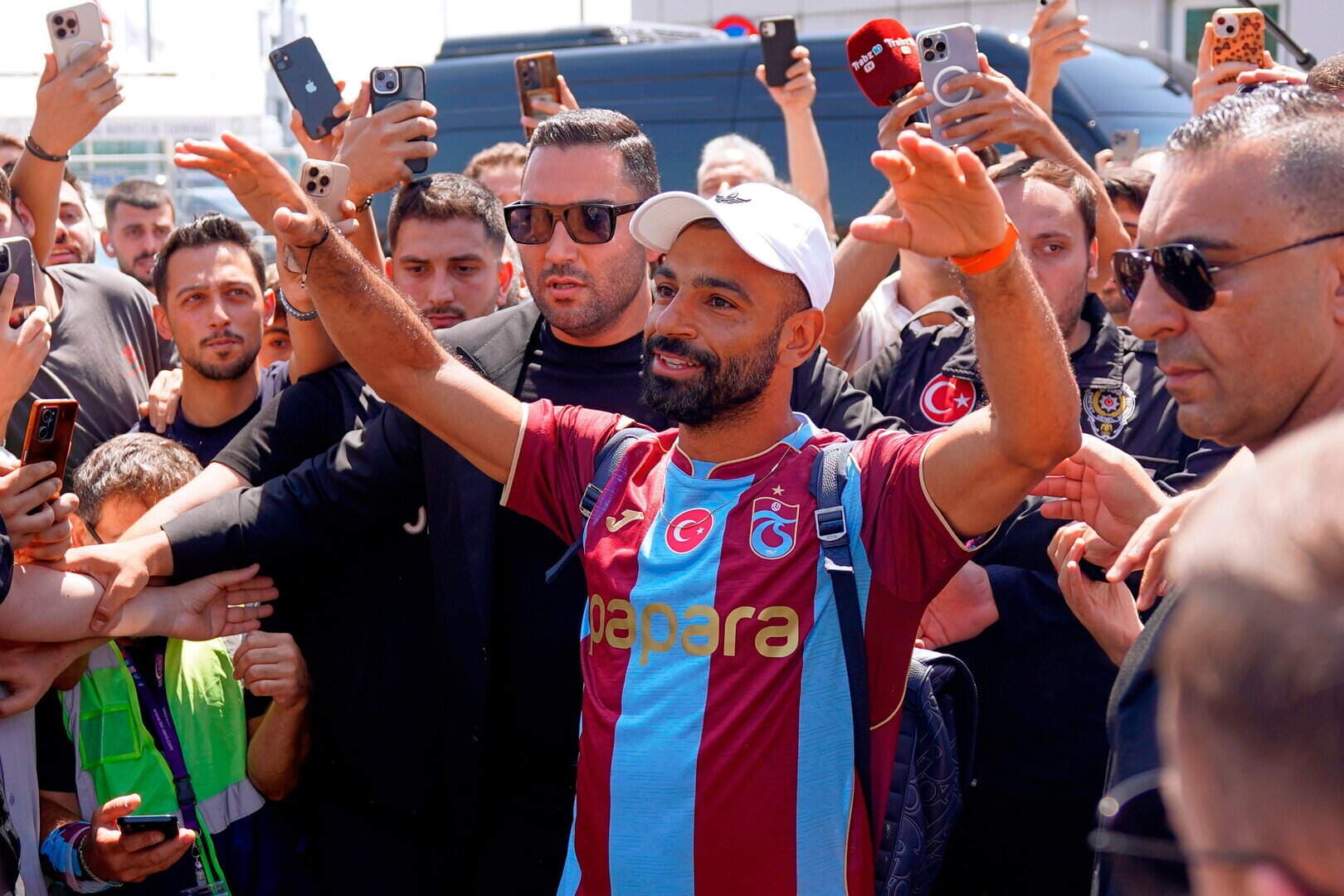
On the surface, giving away 20-25% of jersey sales to a 34-year-old coming off a difficult final season might raise an eyebrow or two. But the logic only needs to work one way. Volume. If Trabzonspor were shifting 10,000 jerseys a season previously and that number multiplies significantly off the back of Salah’s global profile, their 75-80% share of a much larger number still represents significant commercial gain. The bet is not that Salah is cheap. The bet is that he makes the whole operation considerably bigger, and considering 25,000 people showed up to his unveiling on short notice, I’d bet they are on the way to doing just that.
That decision is the whole story, and it is a marketing story long before it is a football one.
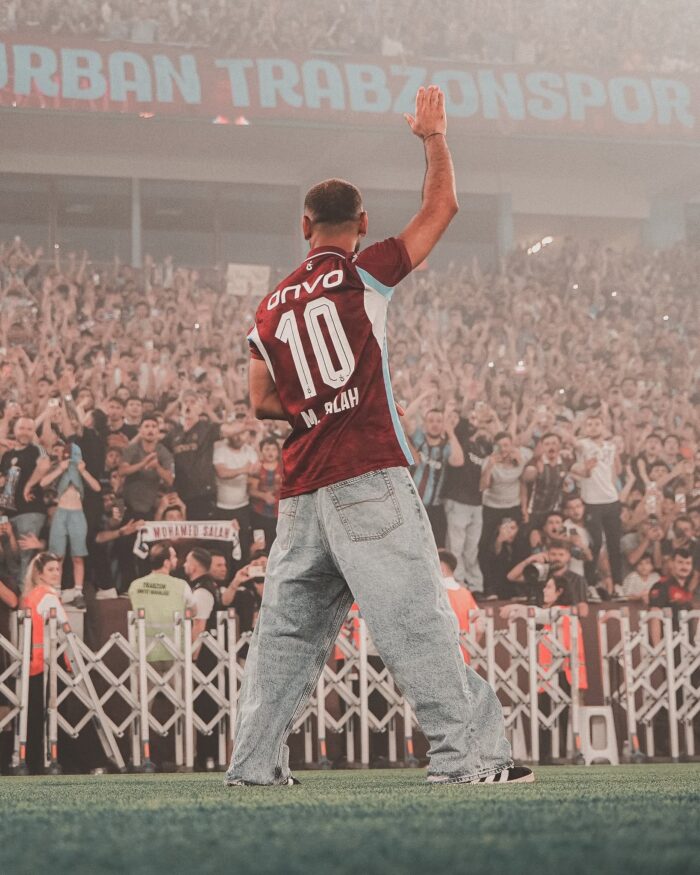
After securing the Premier League title for Liverpool in 2019/20, the following season saw Mo Salah shirts account for 42% of Liverpool jerseys sold, and 128,000 sold after 48 hours of last season’s launch. If you remove football from the situation, you are looking at a conversion rate. Salah’s name turns to purchases when presented to the right audience at the right time.
Credit: MANSA sports
The market moved immediately, long before a ball is kicked.
As soon as talks between Trabzonspor and Salah were confirmed, the club’s share price rose 6.5%. Salah is 34, and had fallen out of favour with the then Liverpool manager Arne Slot by the end of the 2025/2026 season, where a shift in football style saw the winger underused and isolated. None of this mattered in the context of any move. What mattered was the size of the audience that he brought with him, with large volumes of fans coming from the Arab world and Africa, where I would guess Trabzonspor holds very little of the market share when it comes to preferred football clubs.
Just how big is that audience, though? Salah’s 67 million Instagram followers is only part of it. He’s also sitting on around 19.5 million on X and 19.2 million on Facebook. For context, Trabzonspor’s own Instagram account has around 1.6 million followers, meaning Salah’s following on that platform alone is roughly 40 times the size of the club’s.
Follower count is only part of the story. For a marketer, organic reach is the far more telling stat.
Accounts of the size of Mo Salah’s instagram typically see 3-7% in organic reach based on recent benchmarks. This means any single post from Mo Salah would appear in front of roughly 2-5 million people. Facebook’s organic reach sits between 1.4-2.2%, a further 270,000-420,000 people, with Twitter (X) at the lowest organic reach, somewhere around the 1% mark, still another 100,000 people in this example.
This is more reach than the majority of brands can create with paid media budget factored in, and all this is before Trabzonspor consider adding a single cent of budget.
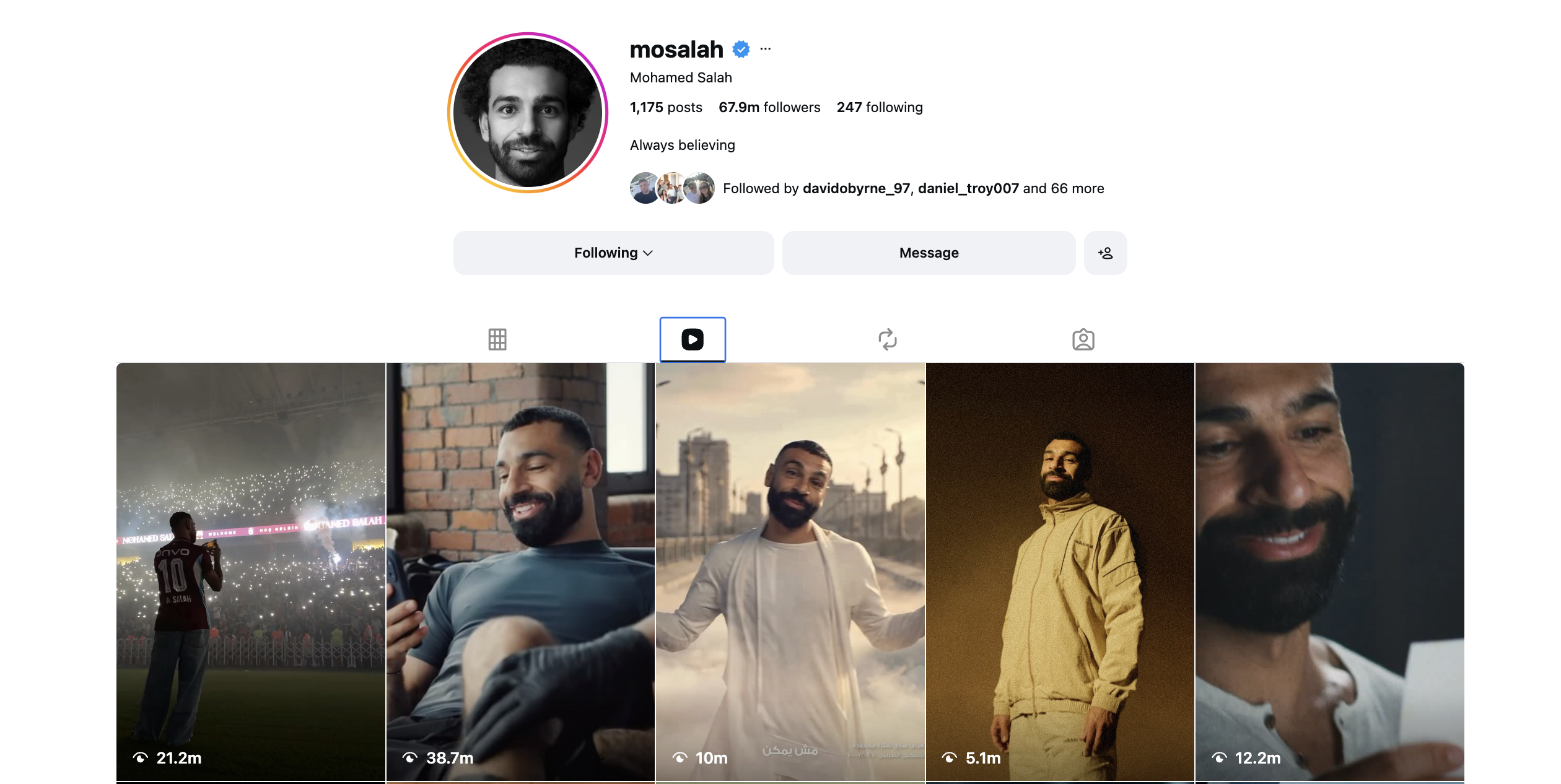
Mohamed Salah’s Instagram account
What Salah brings Trabzonspor from a marketing perspective
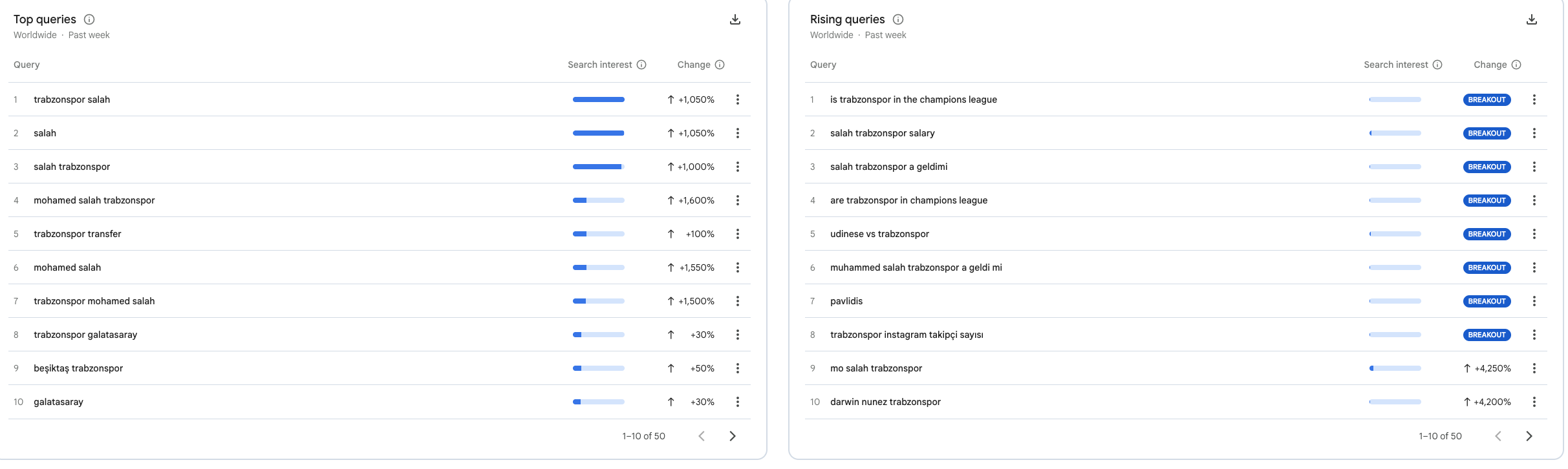
Take a quick look at Google trends. Mo Salah just bought Trabzonspor a serious branded search spike. “Trabzonspor Salah,” “Salah Trabzonspor shirt,” “Salah shirt Turkey” and every long-tail variant of that will spike hard over the coming days and settle into a permanently higher baseline for the Turkish side, meaning, if they have it set up correctly, they should own those terms organically in the club’s online store and official website and keep the traffic that comes with it. A major SEO boost.
Salah’s existing fanbase is one of the most dedicated in the world, rivalling Messi and Ronaldo. This dedication once even saw the Egyptian receiving over 1 million votes in Egypt’s 2018 presidential election.
For Trabzonspor, that’s a built-in lookalike audience on Meta for the club to reach that they could never have reached previously. A large number of Arabic and North African segments now are targetable for the club, with a warm audience built in.
Google ads brand campaigns remain the key defense strategy for the club. As searches start to spike on the topics around Salah, resellers and unofficial sellers will swoop in on terms the club should own. If Trabzonspor aren’t running paid brand ads to counter queries for “Salah shirt,” “Salah Trabzonspor jersey,” and other high-intent variations, they risk losing both the digital footprint and the transaction to competitors.
None of this happens on the pitch, but it will show up for the club’s marketing team on Google Ads dashboards, Meta Ads account or Search Console.
The takeaway for anyone running Google Ads, Meta Ads or SEO
The bigger name in the room, Besiktas, undervalued a demand generation machine like Mo Salah. Trabzonspor won by correctly valuing the asset and the audience that comes with it over the initial wage bill, the question is now whether the marketing team capitalises on that demand before the window closes.
The Salah deal is an extreme example, but the principle applies everywhere.
This is the kind of gap we help clients with at Friday. Spotting when an audience shift, a spike in demand or a new market has just opened up, and making sure that Google Ads and Meta Ads activity, and the SEO foundations, are ready to capture it fast rather than losing that traffic and revenue to someone quicker off the mark. If you think we could help you with that, contact us today.

 Richard Lawton
 Dave Jackson