 Dave Jackson
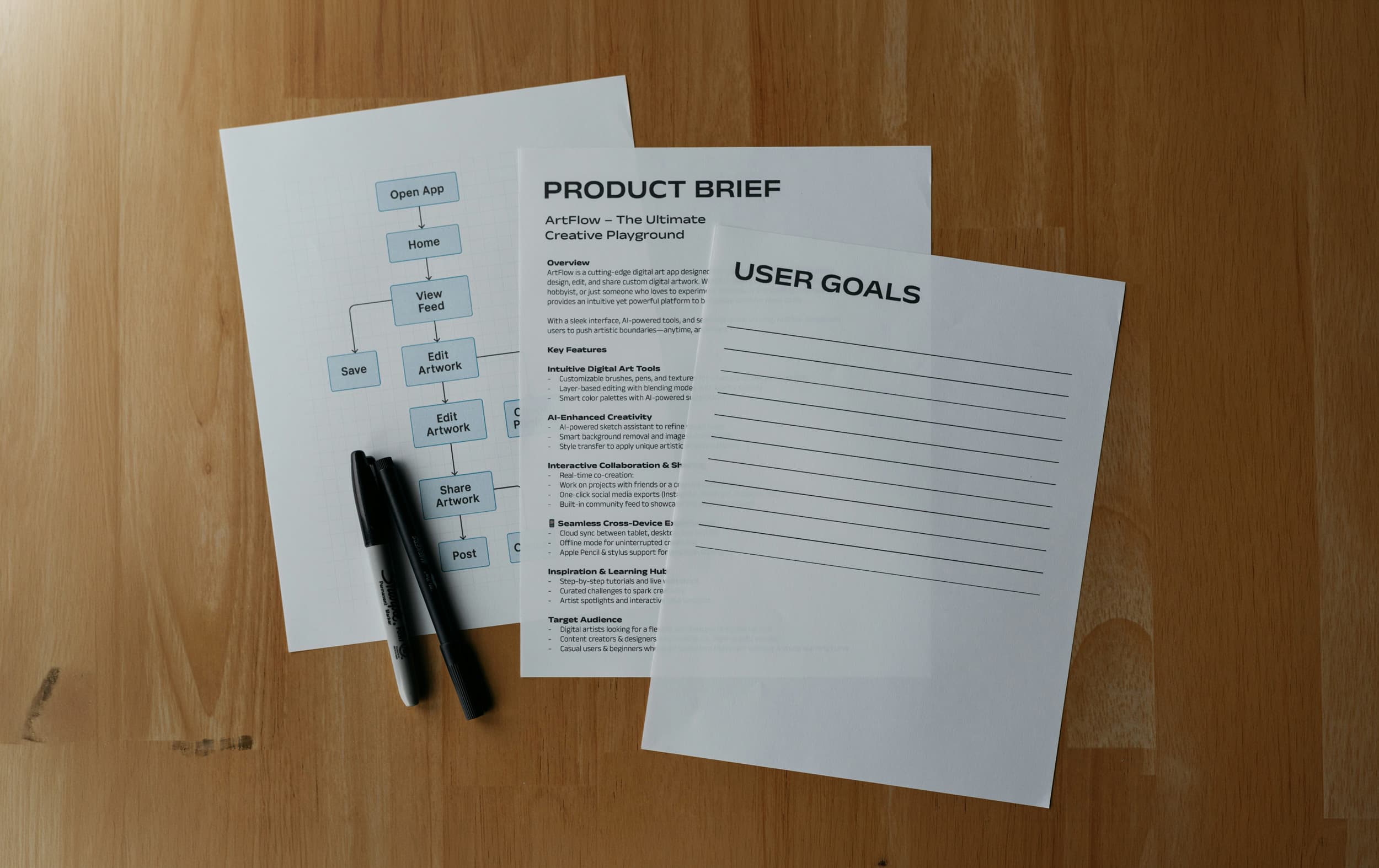
Writing a brief is probably as much fun as writing a proposal! Few enjoy the task, but it’s one document whose influence on a project’s success, budget and timeline is often underestimated.
Where Every Project Starts
As a client, you may have a requirement for a project or campaign coming up that hasn’t been fully fleshed out yet. You talk to your team or agency to shape the detail so they can propose what the process and outputs need to be. You won’t have all the answers, and nor should you; your digital agency are the experts.
A brief is the point where an idea becomes a shared plan. It nails down the problem or goal, who it needs to land with, the constraints around budget, timeline, brand and tech, what gets handed over, and what “done” actually looks like.
Clarity Is Free, Confusion Isn’t
Investing the time into creating a good brief is one of the best ways to save time and money. It should strive to establish clarity around your expectations. Briefing should always be a collaborative process; there needs to be dialogue. Sending a brief without allowing questions and scrutiny sets the precedent for how collaboration might work.
Procurement rules around Government tenders don’t allow free dialogue, and this is one of the reasons we mostly don’t go for them. Reach out to your agency for help in creating a brief; clarity is in everyone’s interest. In many cases we’ve helped clients write the brief for work we did not necessarily win or even pitch for. Nobody is better placed to help articulate your requirements to an agency than an agency.

Every Gap Has a Price
Every gap in the brief gets filled with an assumption; every assumption carries risk and risk costs money. An unclear brief means either the agency eats the risk (bad for the agency) or prices it in (bad for the client). Either way, the client loses. Gaps can also present themselves later in the project where the client has assumed a deliverable that maybe isn’t covered in the brief; again, this can cause friction that results in scope creep, added costs and timings – something that could easily have been avoided.
Pricing the Unknowns
One way of handling this is to actually price around ambiguity, assumptions documented, options costed and the client choosing to underwrite them rather than pretending they don’t exist. This isn’t ideal for both parties and makes proposal review more uncomfortable.
We prefer to work with the client collaboratively to help evolve the brief to make sure there is enough detail so we can provide an approach that won’t cause issues later in the project. Digging into the detail early on can be worth the time and effort; you’ll get a feel for the agency as they will for you. Expectations are set on both sides, and this process helps de-risk the project.
Sure, you can bang a prompt into AI and ask it to create a brief, but will it understand the nuance and cover all deliverables? It can often add in detail you may not fully understand (and be questioned on later) and may be misleading. We’ve read a few AI briefs that we’ve had to scrutinise closely across a number of calls and emails, and in most cases they turned out to be counterproductive for both parties if not executed with careful attention to detail.

The Cheapest Insurance You’ll Buy
A good brief isn’t bureaucracy, it’s the cheapest project insurance a client will ever buy. Engage with your agency, ask them what detail they need from you. Take the time to collaborate with them and get a feel for how they approach things, it will tell you a lot about their suitability for the project.
We always work with clients to help shape their requirements so they know what they’re getting and we know what we’re executing. It brings clarity and certainty to our projects, and makes for a much smoother process and overall efficiency.
If you need help developing a brief for a project you are working on, talk to us, and we’d be happy to help you articulate your requirements.


 Evan O'Reilly
 Mary Brennan