 Mary Brennan
Creativity Isn’t a Talent. It’s Three Intrinsically Human Processes, and None of Them Are Talent.
Every morning, you unlock a phone with a gesture so natural it feels like it was always a thing. Someone invented it. And the way they invented it came down to three processes specific to being human – a body that felt the problem, a brain that knew how to strike the sweet spot between intense focus and letting go, and a genuine need to fix something that was bothering them.
Salvador Dalí Had a Key. Thomas Edison Had Steel Balls.
Salvador Dalí kept a metal key in his hand when he napped. Beneath it, a plate on the floor. As he drifted toward sleep, his grip loosened, the key dropped, the clatter woke him and he went straight to the canvas.
Thomas Edison did the same independently, using steel balls suspended over metal saucers. He credited many of his most significant ideas (the phonograph, the incandescent lightbulb, the motion picture camera) to those few seconds of interrupted drift.
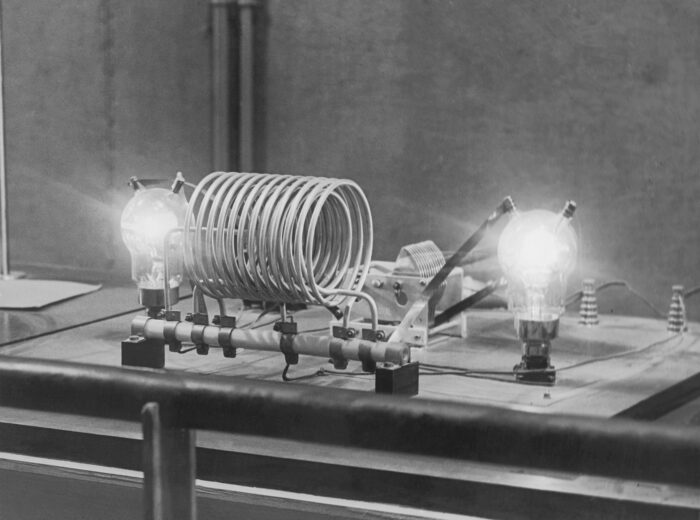
Two of the most prolific creative minds in history, different fields, a generation apart, arriving at the same technique without comparing notes. That’s not coincidence. That’s both of them understanding something about how the brain actually works.
The trick wasn’t the napping. It was catching the moment just before sleep took over – that brief window where the brain stops defending its assumptions.
What’s Happening in the Brain
The hypnagogic state is the transitional window between wakefulness and sleep, lasting anywhere from a few seconds to several minutes. Beta waves give way to theta waves. The brain’s filtering system loosens and connections form between ideas that focused thinking would never allow near each other. When you concentrate hard on a problem, a separate network – the default mode network, responsible for associative and unexpected thinking – goes quiet. The hypnagogic state is where both can briefly coexist.
In 2021, researchers at the Paris Brain Institute found that participants who entered this state were three times more likely to discover the hidden rule in a mathematical problem than those who stayed awake and kept working.
None of this is mystical. It’s neurological. And it can be cultivated deliberately.
Our Agency is based beside Merrion Square Park for a reason. The red couch in our studio exists for the same reason. A ten-minute walk or a few minutes horizontal isn’t downtime – it’s the default mode network doing its job. It has raised the odd eyebrow at client meetings and we love explaining why.
The Three Human Processes Behind Pull to Refresh
In 2008, Loren Brichter was building Tweetie, a Twitter client. Version one had a standard refresh button. He’d tapped it hundreds of times. And this is where three distinctly human processes came together to produce something that ended up on every smartphone on the planet.
Intentionality. Brichter wasn’t briefed to invent a new gesture. He was personally frustrated by a button and couldn’t leave it alone. Psychologist Mark Runco at Southern Oregon University argues this is the defining difference between human creativity and AI output. Humans choose to solve problems they personally feel. AI responds to prompts. It has no frustration of its own, no reason to care whether the answer is right. It cannot find a problem. It can only be handed one.
Proprioception. The body’s real-time physical intelligence. Not stored memory but active sensing. Brichter’s thumb wasn’t remembering the friction of that button. It was feeling it, accumulating it, registering something wrong before his conscious mind had formed the question. The solution didn’t come from the screen. It came from his hand. AI has no body. No contact with the problem. No proprioceptive data at all.
The hypnagogic state. When Brichter stopped pushing at the conventional solution, his loosened mind made the associative leap. Not through effort. Through release. The same mechanism Dalí was engineering with a key over a plate.
Intentionality planted the problem. Proprioception accumulated the evidence. The hypnagogic state surfaced the answer. Remove any one of them and the breakthrough doesn’t happen.
How This Should Shape the Way You Think About Your Product’s Future
The digital experiences that change behaviour are built by people who were genuinely bothered by something, felt it in their body, and knew when to focus and knew when to pull back. As AI becomes a more central part of how digital products are built, the decisions businesses make about creativity – who drives it and how much of it gets handed over – will define what their products become.
Understanding what human creativity actually is, and what it produces that nothing else can, isn’t just interesting. It’s a key component in this decision.
The Question Worth Sitting With
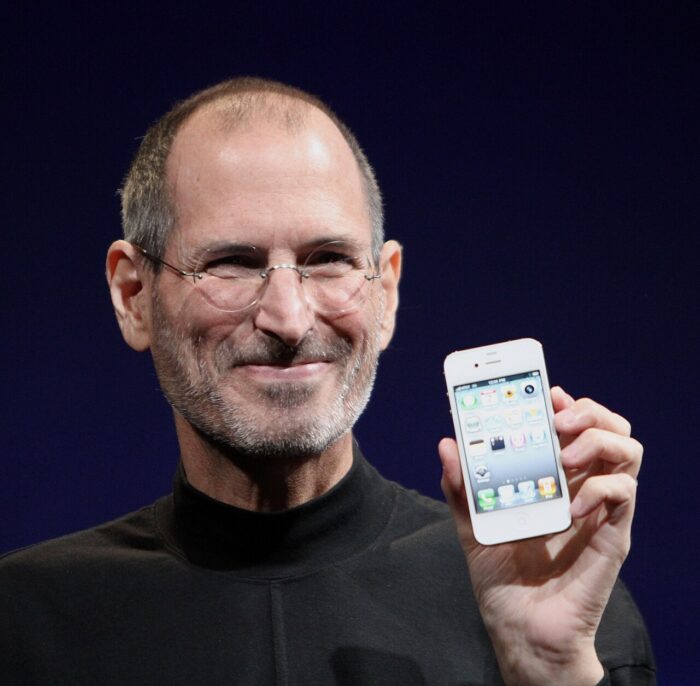
The hand that made the phone, held the phone. It had felt the friction. It had been genuinely bothered by something small and couldn’t let it go.
What happens to the evolution of that phone when the hand making it has never held one?
Friday is a digital design and UX agency based in Dublin. If you’re building a digital product or experience and want to work with a team that takes creativity seriously, we’d like to talk.

 Gavin Duff
 Elton Tsang