
 Mary Brennan
If colour is doing its job, users move faster, feel more confident, and make fewer mistakes…
It helps users move through an interface with less effort. It can make things feel clearer, faster, and more trustworthy. It can also do the opposite if it is used without intent.
But what exactly is the role of colour in User Experience? And where does psychology come into play? Let’s take a look at some key insights.
Most colour advice is too simple.
You have probably heard it already. Blue builds trust. Red creates urgency. Green means success.
There is some truth in those ideas, but they fall apart the moment you test them in real products.
Andrew Elliot, a professor of psychology known for his research on colour and human behaviour, has spent years studying this. His work shows that colour does influence how we think and act, but it is heavily dependent on the situation.
The same colour can encourage action in one moment and hesitation in another. That is the part most teams miss.
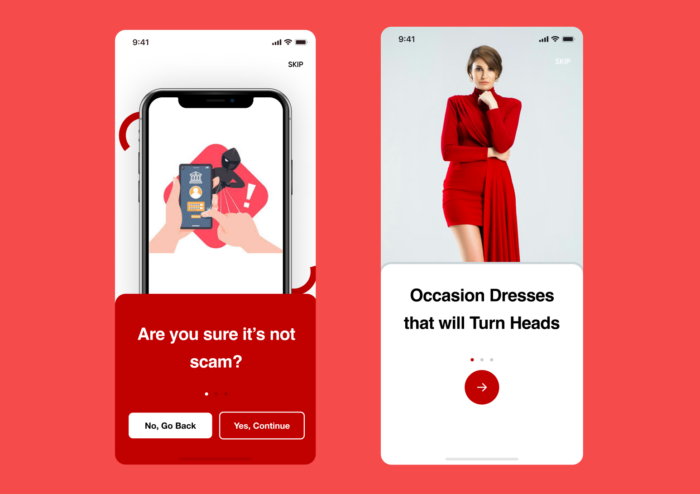
Colour is seen instantly, but understood through context.
We process colour almost immediately, but what it means to us comes from experience.
In one study, participants responded differently to the same colour depending on the task. Red made people move faster in a dating scenario, but slower in a test scenario. The colour did not change. The meaning did.
That is exactly how interfaces work. Users are not reacting to colour alone. They are reacting to what they think is happening on the screen.
A red button on a checkout page does not feel the same as a red button on a finance app. The task changes the meaning.
Colour supports trust. It does not create it on its own.
Trust is not about picking the “right” colour. Blue is often treated as the safe choice for trust. You see it everywhere in finance and tech.
There is some evidence that blue can support positive reactions, but it is not a shortcut.
What matters more is whether the colour feels appropriate in the context of the product. A well-structured, clear interface will feel more trustworthy than a confusing one, regardless of colour.
There is also a cultural layer. Studies looking at website design across different regions show that colour preferences and trust signals vary. What feels credible in one market may not translate in another.
Choosing a colour doesn’t mean you’ve earned trust. Applying the colour intentionally will support trust.
Colour is not just emotional. It is structural.
When colour is used to group related elements, highlight status, or show relationships, it reduces the amount of thinking users need to do.
Research consistently backs what good UX research practitioners already know. There is a study in Frontiers in Psychology where participants were asked to learn programming concepts. One group saw colour-coded information. The other saw the same content in grayscale.
The colour-coded group found it easier to process and performed better. The grayscale group had to work harder to understand the same information.
The takeaway is straightforward. Colour reduces effort when it helps users organise information. If it is just decorative, it adds noise instead.

Colour is a spotlight. It directs attention.
Users do not read screens in order. They scan. They look for signals.
Colour is one of the strongest of those signals.
Research looking at brain activity shows that certain colours can pull attention very quickly, especially when there is an emotional context. In simple terms, colour can act like a spotlight.
The important part is this: if everything is trying to grab attention, nothing stands out.
Designers often try to make key actions “pop.” That only works if the rest of the interface is calm enough to support it. If multiple elements compete, users have to work harder to decide where to look.
Colour shapes what people remember.
Colour also affects memory more than most design teams realise.
People remember coloured visuals better than black and white ones. Even small differences in colour can make something easier to recognise later.
In a product that matters for repeat actions. If your success states, warnings, or key actions keep changing colour, users have to relearn them each time.
Consistency is not just about neatness. It helps people remember how things work.
Colour can influence decisions, but only slightly.
Colour does play a role in decision-making, but not in the way growth teams often hope.
Changing a button colour will not suddenly transform performance if the rest of the experience is unclear.
What colour can do is reinforce meaning. It can make an action feel safer, more urgent, or more obvious depending on the situation.
If users already understand what to do, colour can help them act. If they are confused, colour will not fix that.
Contrast and clarity are non-negotiable.
There is also a more basic layer that often gets overlooked.
If users cannot clearly see or distinguish elements, everything else falls apart.
Accessibility guidelines exist for a reason. Contrast levels are set to ensure text and key elements can be read by as many people as possible, including those with reduced vision or colour blindness.
Around 1 in 12 men have some form of colour vision deficiency. If you rely on colour alone to communicate meaning, you are excluding people.
There is a broader point here, too. If accessibility is treated as a box-ticking exercise, the design is already off track. This is explored in more detail here.
Clear contrast is not just about compliance. It is about making your product usable.
What this means for UX Design.
Colour works best when it is playing a clear role.
Use it to:
- Guide attention
- Show hierarchy
- Communicate state and feedback
- Group related elements
- Reinforce meaning consistently
Avoid using it to:
- Decorate without purpose
- Replace clear structure
- Carry meaning on its own
Get those right, and colour becomes one of the most powerful tools you have.
At Friday, we design using colour with intention. To make things clearer, faster, and easier to use. UX decisions are not decoration. Ever. They are deliberate. Get in touch today.


 Elliott Mullen